Tampilkan postingan dengan label Tips and Techniques. Tampilkan semua postingan

Selasa, 15 Desember 2015

Home-Cured Holiday Ham – First You Brine, Then You Brag

There are many reasons for making your own holiday ham, but the best one of all, may be the most superficial. After the holidays, as people are standing around the water cooler, bragging how great their glazed carrots were, or how amazing the cranberry sauce came out, you can say, “That sounds great, but did anyone else cure their own ham? I didn’t think so.”

Above and beyond establishing your culinary dominance with friends, the other reasons are pretty good too. You can flavor your ham any way you want; you can somewhat control the salt content; and depending on how many people you need to feed, can cure any size cut of pork you want, from a whole leg to a small loin roast.

There are thousands of different brine and spice combinations, but the procedure is pretty much the same no matter which way you go. However, there is one thing all these recipes have in common, pink salt. To make a true ham, you’re going to need a curing salt that contains sodium nitrite, which is what gives the meat its pink color, and signature “ham” taste, verses something that just tastes like roast pork.

This magical ingredient goes by several names, including Pink Curing Salt #, Insta Cure #1, or the one I used, Prague Powder #1. Yes, you can theoretically use things like celery juice, but long story short, nitrites are nitrites, and it doesn’t matter where they come from. For more info on that, and potential health issues, this article by Michael Ruhlman is a good read.

Once the ham is cured, you’ll want to give it a soak to rinse off the brine, and how long you do this can effect how salty your meat is. I prefer just a quick dunk, but you can leave it for as long as 24 hours, which will produce what I’ll call a low-sodium ham. It’s still pink, and flavorful, but barely salty. Experimentation is the only way to figure out how long to you should go, but I wanted to give you the range.

If you do want a home-cured ham gracing your Christmas table, I’ve given you just enough time to get it done. A local butcher should be happy to give you a few tablespoons of pink salt, otherwise it’s quite easy to find online. Whether it’s for a holiday dinner or not, I really hope you give this a try. Enjoy!


Ingredients:
7 to 10 pound fresh, bone-in pork shoulder “picnic” arm roast (or any large hunk of pork)
For the brine (adapted from Ruhlman’s basic ham brine recipe):
6 quarts water
18 ounces kosher salt (this is about 2 1/4 cups Morton's Kosher Salt, or 3 2/3 cups Diamond Crystal Kosher Salt, as they have difference size grains)
2 cups brown sugar
2 tablespoons plus 1 teaspoon pink salt #1
1 rounded tbsp pickling spice, or any spices you want

For the optional glaze:
1/4 cup Dijon mustard
1/4 cup maple syrup
pinch of cayenne
pinch of salt  

- Once cured, you should smoke and/or roast your ham until it reaches an internal temp of at least 145-150 F. 

- For a more detailed video on how I prep a ham for the oven, check out this Crispy Honey-Glazed Ham video.

Selasa, 27 Oktober 2015

Pan-Roasted Chicken Breasts – Less Time, More Skin = Better Breasts

Cooking up a few chicken breasts should be a fast, easy, and delicious experience, but for many people it’s actually a slow, hard, and disappointing one. There are several reasons for this, and hopefully this demo for how to pan-roast chicken will eliminate them.

The most important factor is doneness. By “pan-roasting,” you can easily monitor the internal temp, and as I recommend in the video, start the pan sauce when the meat reaches about 150 F. By the time your sauce is done, and the chicken is covered in its hot, buttery goodness, it should have reached 155-160 F., which is what I shoot for.

At this temp, the chicken will be perfectly safe, while remaining moist and tender. I know many recipes, and reference sites, call for longer cooking times, and internal temps of 165-175 F., but that’s just crazy. Unless, you want tough, dry meat; in which case, that works wonderfully.

Also, I think it’s very important we leave the skin on. Not only does this add a lot of flavor, but also much-needed moisture. Even if you’ve been brain-washed into thinking the skin is “bad” for you, which it isn’t, you can peel it off before you eat it, but I recommend leaving it on during the cooking process.

And yes, we’d be getting even more flavor and moisture if we just left the breasts on the bone, but the whole point is for this to be fast to make, and effortless to eat. Otherwise, we might as well roast a whole chicken.

If you’re not into creating your own boneless, skin-on breasts, like we did in the video, you can have the butcher at the market do this for you. You’ll have to go to a larger store where they cut up their own chicken parts, and tell them exactly what you want, but they’ll hook you up at no extra charge. I really hope you give this easy, and very effective technique a try soon. Enjoy!


Ingredients for 4 portions:
4 boneless, but skin-on chicken breasts
salt and freshly ground black pepper to taste
1 tbsp finely chopped fresh herbs, optional
2 tbsp olive oil
1/4 cup *vinegar
4 tbsp cold butter, cut in smaller pieces
a splash of chicken broth or water, if needed to thin sauce

*I used apple cider here, but literally any vinegar will work. Some of my favorites are sherry, balsamic, rice, and champagne vinegar.

Jumat, 18 September 2015

Poached Pears “Belle Helene” - Why Escoffier Really Created This Dish

They say Auguste Escoffier created this dish in honor of the opera, La Belle Helen, but we chefs know the real reason. How else are you going to use up bruised pears in such a delicious and beautiful way? Okay, so maybe that wasn’t his motivation, but as you’ll see in the video, it sure does work great.

The recipe is very straightforward, so instead we’ll go into your options for the chocolate sauce, as well as what to do with all that extra simple syrup. We have two chocolate preparations that will work for this (and have been linked). The first would be our easy hot fudge recipe; and the second, and more traditional choice, would be the classic chocolate ganache.

If you follow the link to the later, you’ll be taken to our Boston Cream Pie video, where you’ll see the technique for creating a classic ganache, but you’ll probably need to adjust the ratio of cream to chocolate. Generally it’s equal parts chocolate and cream, but if you want something more pourable, then 2 parts cream to 1 part chocolate (by weight) would work better.

As far as the extra vanilla poaching liquid goes; you’ll want to strain it, pour it into some cool looking bottles, and give it away as edible gifts. The taste is incredible. Better than the pears, if we’re being honest, and would make a fantastic holiday treat for the wannabe mixologists in your life. I really hope you give this a try soon. Enjoy!


Ingredients for 4 poached pears:
6 cups water
zest and juice of one lemon
4 bosc pears, cored and peeled (you can also use Anjou or Bartlett)
1 split vanilla bean, or a few teaspoons of vanilla extract
3 cups sugar
Simmer for about 20-25 minutes, depending on size and firmness

Rabu, 09 September 2015

How to Make Your Own Prepared Horseradish – Feeling Hot, Hot, Hot

Every time I use horseradish in a recipe, I get e-mails from people asking me how they can make it at home. They mention they can get the fresh root, but can’t find anything already prepared in the jar, which in some cases is hard to believe – like when the email originates from New York City – but regardless, this is still a very worthwhile thing to learn how to make.

Worthwhile, and somewhat painful, if you’re not careful. As I mention in the video, the fumes produced by this process are very intense, and will cause burning eyes and runny noses, if you’re not in a well-ventilated space. Having said that, using a little common sense, it’s really not that bad, and so totally worth it.

This really is quite easy if you have a food processor, but if you don’t, a heavy-duty blender will work, although you may have to add more water in the first step, to get the mixture fine enough. You can also grate this very fine on a microplane, but that would probably only be practical if you’re making a smaller amount.

Once your horseradish has been ground finely, the technique is very simple. I like to wait two or three minutes (this is supposed to make it hotter), before adding the salt and vinegar. Then, I’ll simply process, adding as much water as necessary, until I have a nice, smooth, creamy mixture.

And while this looks like something from the grocery store, the flavor is incomparable. Intensely hot, and aromatic; this is the real deal. So, whether you’re one of these people, who lives in a place where they don’t have jarred horseradish, like apparently New York City, or you always wanted to try and make some yourself, I really hope you give it a try soon. Enjoy!


Ingredients for about 3 cups: you read this please in here
1 pound peeled, cubed fresh horseradish root
cold water as needed (about 3/4 cup total)
1 1/2 teaspoons kosher salt
1/3 cup white distilled vinegar

Selasa, 18 Agustus 2015

Homemade Dill Pickles – Naturally Fermented, Whatever That Means

This is going to be an easy post, in that I know virtually nothing about fermenting pickles. The only thing I know for sure is how to make them, and for me, that’s enough. If you make a simple salt brine, add some spices, and submerge Kirby cucumbers in it for about a week, you get some fairly delicious pickles.

Maybe it’s dumb luck, or just overwhelmingly good karma, but fortunately I’ve not experienced any of the problems I’ve seen others lament; such as mushy texture, scary molds, or exploding jars. Apparently, cucumbers are one of the more finicky things to pickle, but that hasn’t been my experience.

Like I said in the video, I’ve only made these a handful of times, so maybe my time is coming, but I’m pretty sure if you measure your salt right, and store the fermenting pickles at an appropriate temperature, you should get something close to what you see here.

Having said that, I will refer any and all of your questions having to do with variations, troubleshooting, probiotics, and/or best practices, to the Internet. The purpose of this video is to simply show the process, and how ridiculously easy it is. If this seems like something you want to try, and it should, I recommend doing lots of research before starting, so at least you’ll have someone else to blame if things go horribly wrong.

One thing I can tell you for sure is that you have to use pure salt for this. Table salt can contain additives like iodine, which inhibits the bacterial growth necessary for this to work. I’m also giving you weight measurements for the salt, since the size of the salt crystal can really effect measuring by volume.

Other than getting your brine right, just be sure to get very fresh, very firm pickling cucumbers to make this with. If your cucumbers start off soft and mushy, your pickles will be terrible, and not have that loud crunch associated with the finest examples. I really do hope you give this a try. Enjoy!


Ingredients:
2 pounds very fresh Kirby cucumbers, washed thoroughly
Handful of fresh, flowering dillweed
For the brine:
8 cups cold fresh water
8 tablespoons Kosher salt (By weight, you wants exactly 80 grams. The brand of kosher salt I use weighs about 10 gram per tablespoon, but yours may not, so it’s best to use a scale if possible.)
4 cloves peeled garlic
2 teaspoons whole coriander seed
2 teaspoon black peppercorn
3 or 4 bay leaves
4 whole cloves

- Ferment at room temperature (I hear that between 70-75 F. is ideal) for about a week. Check every day as these can ferment fast. They are done when you like the taste. If you go too far, they start to get soft, and the inside gets hollow. Keep the brine level topped off.
- This makes extra brine for topping off.

Pickling Spice Note: I tend not to like a lot of spices in my pickles, so I believe the amounts listed here are fairly puny compared to most recipes. Feel free to find one of the many pickling spices recipes online, and use that instead.

Jumat, 07 Agustus 2015

Grilled Beef Flank Steak “Pastrami” – Backyard Deli

I’ll do a proper pastrami one of these days. Maybe right after I get a smoker. But in the meantime, this pastrami-spiced beef flank steak should do nicely. As with all "cheater" recipes, managing your expectations is key.

You can’t get the texture and color of a real “pastrami” without the curing step, where the meat is soaked in a brine, before being spiced/smoked, but you can get pretty close to the flavor, using the spice rub seen herein.

We’ve used a similar technique to turn plain corned beef into “pastrami,” as well as create a duck Reuben; one of my favorite videos of all time. By the way, the ingredient amounts below have been adjusted slightly, as my spice rub was a tad bit overpowering.

I’ve backed down the black pepper and mustard, but as with all spice amounts, that’s really up to you. If you simply put salt and pepper on a flank steak, and grill it properly, you’ll have something delicious to eat, so keep that in mind as you rub your meat. 

I ate mine fresh, but if you let it cool, slice it thin, and warm it up in a pan with a little splash of water, and a tiny pinch of sugar, you’ll have something even more pastrami-like. I really hope you give this a try soon. Enjoy!

SPECIAL NOTE: I let my meat warm to room temp before grilling, so the inside reaches my desired temp a little quicker, and before the outside spice rub gets too black. Conversely, when grilling a steak, and there's nothing to burn on the surface, I generally like the meat cold, so the outside has plenty of time to sear, before the meat inside is done. 


Ingredients for 4 large portions:
1 trimmed beef flank steak (usually 1.5 to 1.75 pounds)
2 tsp vegetable oil
1 tbsp freshly ground black pepper
1 tbsp ground coriander
1 tbsp kosher salt
2 tsp paprika
1/2 tsp dry mustard
- For best results, cook to a medium. I pulled at about 135 F. internal temp, which will rise to about 140 F. as it rests.
-Serve with slightly sweetened mustard and rye bread

Minggu, 31 Mei 2015

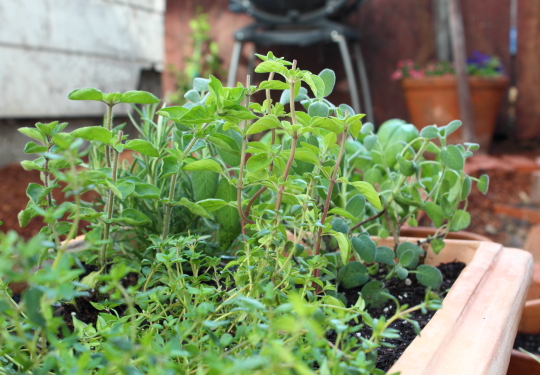
Grow Your Own Culinary Herb Garden – Yard to Table

I mentioned several times during this ‘how to plant your own culinary herb garden’ video that I’d give a lot more specific information on the blog, but now that I’m here, I realize there’s not much more to tell you.

Herbs are very easy to grow, and besides basil, which doesn't like to dry out, they only require occasional watering. Any well-drained soil will work, but your best bet is to grab a bag of ready-to-use planting mix. Feel free to double check with the person at the nursery, but it’s basically potting soil with benefits. And, I did say nursery. Drive the extra mile, and talk to people that just sell plants.

I consider these herbs must-haves, but there are many more varieties you can try. I’ve done things like tarragon and cilantro in the past, and while they are a little more temperamental, they can be successfully cultivated.

Nothing beats being able to go out into the garden, and just take a pinch of this and a pinch of that. When you consider the cost of one of these plants is just a little more than for a single bunch at the market, why not have a few pots around, even if they’re on the windowsill? I hope you plant your garden soon. Enjoy!

NOTE: I’m not a gardening expert, so asking me specific question about soil types and weather issues will result in many a guess. My advice would be to use this video as an inspiration, and then check out some local gardening websites.

Minggu, 03 Mei 2015

How to Fix a Broken Hollandaise Sauce

It happens to the best of us. You did everything right, and yet somehow your gorgeous hollandaise sauce has separated. Your hungry, possibly hangry, brunch guests are sitting down, and you're in the kitchen panicking, since there's no time to start a new one from scratch. What do you do? What...do....you....do?

First, take a deep breath, and by "deep breath" I mean a big sip of your Bloody Mary. Then, do what you see me do in this video. A hollandaise sauce is actually very easy to fix, and only takes a minute. Let's hope you never have to use it, but just in case, I hope you give this great technique a try.

Kamis, 26 Maret 2015

Demi-Glace: Part 2 – Half Again

I could’ve squeezed this stuff into the last video (Demi-Glace Part 1), but it was already too long, and I didn’t want to rush through what’s just as important information. Plus, I really wanted to show some more gelatinized sauce slapping. People really seem to enjoy that, maybe a little too much.

Once you go through all the trouble of making homemade demi-glace, you’ll want to make sure you portion and store it properly, so that it provides you with many months of stellar sauces. 

As seen in the video, you should get 16 nice blocks, each enough for about two servings, depending on the sauce. As amazing as this stuff is when used as a simple pan sauce, stay tuned for a few proper demi-based sauces at some point. I’ve always wanted to do a bordelaise sauce, and now we can. 

Besides using this for sauces, you can also throw a block into braised dishes like short ribs, or coq au vin, and you take something already pretty great, and make it truly memorable. I hope you give homemade demi-glace a try soon. Enjoy!

Senin, 23 Maret 2015

Demi-Glace: Part 1 – Feel the Veal

If you saw the post from earlier today, you know this video has been delayed do to mysterious, and near catastrophic audio problems, but finally we have the first “demi” of the recipe, and I hope it was worth the wait.

This is my technique for veal demi-glace, and there’s not much to it. I’m going for a pure veal stock reduction, fortified with nothing more than mirepoix and tomato. I don’t do the classic roux-based “espagnole” sauce, which is traditionally mixed with veal stock and reduced by half.

Modern versions like this forgo the flour, and simply reduce the stock until the natural gelatin from the bones thickens things up. You get a much more intensely flavored sauce, with a wonderfully luxurious mouthfeel. I also usually make a pure version of the stock without the traditional “bouquet garni,” which is a very classic bundle of herbs and spices, usually wrapped and tied in a piece of leek.

It looks pretty, but I can add any or all of those flavors anytime I want, and we’re also always going to use this as a base for other sauces and applications, all of which bring their own herb and spice blends. Basically, like to keep my options open.

Stay tuned for part two, where I’ll show you what to do with this life-changing liquid, as well as how to portion and store it for many months of brown sauce nirvana. I hope you call your butcher and order some veal bones soon. Enjoy!


Ingredients for 3-4 quarts of Demi-Glace:
10 lbs veal bones, joints and marrow bones
1 tbsp vegetable oil
4 carrots, cut in 2-inch pieces
3 onions, cut in eighths (I did without thinking, but you don’t have to peel the onions)
4 ribs celery, cut in 2-inch pieces
1 (6-oz) can tomato paste
*10 quarts water

*While the stock simmers very, very gently for 18 hours, the level will drop a few inches in the pot, which is fine, but if it seems like the liquid level is getting low, add a few cups of water in.

Senin, 23 Februari 2015

Homemade Beef Jerky – A Real Convenient Store

Until recently, beef jerky was a late night, convenience store impulse buy, and what was in it was the least of your worries at that hour. I’ve had beef jerky where MSG was the most nutritious thing in it, but times have changed. 

Thanks to a new wave of modern day cave-people, eating healthy, high-protein snacks is all the rage, and while you can find many artisan brands out there, making your own is fun, easy, and using this method, relatively quick. 

You can get great flavor with as little as a 3-hour marination, but feel free to go as long as 24-hours. I did half a batch using both methods, and I actually prefer the shorter period, which seems to produce a beefier jerky. Michele on the other hand, liked the longer method, and its spicier, slightly saltier taste.

You can use any lean cut of beef you want, but I think top round is a great choice, as I explain in the video. Whatever you decide to use, please do yourself a favor, and have the butcher cut it for you. Nice thin, even slices are key, so the meat dries evenly. Just tell the butcher you are making jerky, and they’ll know what to do. I hope you give this beef jerky recipe a try soon. Enjoy!


Ingredients for about 6 (2-oz) portions Beef Jerky:
2 pounds thinly sliced beef top round
3/4 cup Worcestershire sauce
3/4 cup soy sauce
2 teaspoons freshly ground black pepper
1 rounded tablespoon smoked paprika
1/4 teaspoon cayenne
1 teaspoon red pepper flakes
1 teaspoon garlic powder
1 teaspoon onion powder
1 generous tablespoon honey
- Marinate for 3 hours or more.
- Bake at 175 F. for 3-4 hours or until dry and leathery

Jumat, 12 Juli 2013

A Touching Video on Chicken Doneness

Although I’ve had many requests for it, I’ve not done a video on how to tell the doneness of steaks using the old “press test.” It does work once you get a feel for different cuts of meat and thicknesses, but these variables make it trickier than some chefs would have you believe.

However, when it comes to chicken breasts, it can be a reliable guide, especially when you don’t have an instant read thermometer handy. Hey, it’s a long way from the backyard grill to the kitchen drawer when you’re lugging around a full beer.

Anyway, my new YouTube buddy, Ariyele Ressler, just did a fun video on the subject, and since we're right in the middle of grilling season, I thought I’d share. Life is just way too short for dry chicken breasts, so check it out. Enjoy!

Senin, 22 April 2013

Meatless Meatballs! Celebrating the Magical Meatiness of Mushrooms on Earth Day

I’ve wanted to turn our famous veggie burger recipe into a meatless meatballs recipe for a long time now, and figured there would be no more appropriate occasion than Earth Day to reveal the results. After all, as I joke about in the clip, eating mushrooms is about as close to literally consuming the earth as you can get.

Despite being completely free of meat, at least the animal kind, these “meatballs” were fantastic. Thanks to a thorough browning, the mushrooms provided more than enough savoriness, and the garlic, cheese, and parsley did the rest. As impressive as I thought the taste was, what really blew me away was how close the texture was to actual meatballs.

For me, the true test of any alternative meatless recipe is whether I would eat it again, based on taste and texture alone, and not just because it’s meatless. In this case, I would…many times over. No, I’m not giving up real meatballs, but for a delicious and vegetarian-friendly change of pace, these really were tremendous.

So, whether you're going to make these because you’re a vegetarian who has been searching for a meatless version, or you’re a hard-core meat eater who just can’t believe your ears and eyes, I hope you give these a try soon. Have a happy Earth Day, and as always, enjoy!


Ingredients for 16 small meatballs:
(recipe can easily be doubled!)
1 pound white mushrooms, chopped into very small pieces
2 tbsp olive oil
pinch of salt to sauté mushrooms
1 tbsp butter
1/2 cup minced onions
4 minced garlic cloves
1/2 cup instant oatmeal
1/2 cup breadcrumbs
packed 1/4 cup chopped Italian parsley
1 ounce by weight, Parmigiano-Reggiano cheese, very finely grated on a microplane
(Note: it looks like a ton of cheese in the video, but it was only 1-oz. Because I used a microplane to grate it, it created a huge looking pile of cheese. It would be about 1/2 cup if you measure, but use weight for this ingredient!)
1 tsp salt
freshly ground black pepper and cayenne to taste
pinch of dried oregano
2 eggs
3 cups of your favorite pasta sauce.
*Let mixture sit overnight in fridge. Bake meatballs for 12-15 at 450 degrees F., then simmer in sauce for 30-60 minutes before serving.

View the complete recipe

Kamis, 04 April 2013

Homemade Ketchup Because You’re Crazy Like That

I want to be very clear that I’m posting this copycat recipe for ketchup only because I’ve received countless food wishes for it, and not because I think it’s a great idea. It’s not even a good idea.  

This tweet I posted yesterday sums things up nicely,  “Making some homemade ketchup. Sure it costs more, and doesn't taste as good as store bought, but at least it takes a really long time to do.”

Of course, we’ve made lots of things that are generally better not homemade, like French fries and fried chicken, but this is much different. For most Americans, ketchup is one of our first taste memories, and if the flavor profile is even the slightest bit off, our brain computes this as “ketchup fail.”

Having said that, I’m very proud of how close this ketchup does come to those name brands in terms of taste, texture and color. I’ve never had a tomato paste-based ketchup that I liked, so I decided to cook down crushed tomatoes instead. This would require many hours of stirring on the stove, but by using the slow cooker, we take most of the labor out of the process. Sure it'll still take many hours to reduce down to a ketchup, but it will only require giving it a quick stir every hour or two.

As I joke about in the video (not really a joke), you’d have to be crazy to make your own ketchup, but despite my warnings, I know in my heart that many of you will give this a try nonetheless, and that makes me happy. Enjoy!


Ingredients to make 3 cups of Ketchup:
2 cans (28-oz) ground tomatoes (you can also used crushed, or just crush whole plum tomatoes)
2/3 cups white sugar
3/4 cup white distilled vinegar
1 teaspoon onion powder (not salt!)
1/2 teaspoon garlic powder (not salt!)
1 3/4 teaspoon salt
1/8 teaspoon celery salt
1/8 teaspoon mustard powder
1/4 tsp finely ground black pepper
1 whole clove
* Cook on the high setting in an uncovered slow cooker until the mixture is reduced by about half and very thick. By the way, my “high” setting isn’t very high, so it took like 10 hours, but don’t rely on a time. Simply cook until it looks like mine did before I strained it.

View the complete recipe

Selasa, 02 April 2013

How to Blueberry Pancakes

Breakfast items are one of the most popular food wishes around here, and while this isn’t technically a recipe, it is a critical technique to learn if you want to enjoy blueberry pancakes at their most delicious. 

Not only does this simple method ensure even distribution, but instead of dry, barely warm fruit, your blueberries will be hot, sweet, and bursting with juice. As far as the batter goes, you are on your own, but if you get stuck, try this old fashioned pancake recipe we posted a few years ago. It gets great reviews!

This video was actually inspired by a recent visit to a diner where I heard someone nearby order blueberry pancakes. That sounds pretty good, I thought to myself, momentarily regretting my corned beef hash decision. Well, good thing I stuck with the hash, as what came out was not blueberry pancakes, but pancakes with a handful of fresh blueberries tossed over the top.

Sorry, but those aren’t blueberry pancakes. No, the blueberries must be cooked inside the batter…but, just not too inside. By “throwing down” you’ll guarantee perfect cake/fruit integration every time. Of course this will work with other berries or cut up fruit, so feel free to try with anything you can grip. I hope you give this great technique a try soon. Enjoy!

Kamis, 28 Maret 2013

Buttercrust Pastry Dough – Good Friday or Anytime

I knew better than to expect you guys to wait until next week for this buttercrust pastry dough, after teasing you with its flaky seductiveness during the apple hand pies video. Yes, the audience has spoken, and basically said, “post this before Easter or else.”

As I mention in the clip, you really want to use a food processor for this. You can certainly use a wire pastry blender and do it by hand, but it’ll take a while, and mixing in the ice water is so much easier with whirling blades. I’m not sure I’ve ever achieved that same gorgeous “breadcrumb” texture blending by hand.

If you decide to use this pastry for a savory recipe, I’d suggest cutting the sugar down a bit, but don’t be tempted to leave it out. I used the leftover dough from the apple turnovers video, which had all the sugar, for some duck pot pies, and it was really good, but maybe just a tiny bit sweet.

If you’re going to use this recipe for some Easter pies or brunch desserts, I hope you like the dough as much as I did. Just make sure your butter cubes are frozen, and your ice water is, well, ice-cold water. These are the keys. Do that, and you’ll have a pastry dough that tastes, feels, and sounds fantastic. I hope you give it a try soon. Enjoy!


Ingredients for about 1 pound pie dough (enough for 1 large pie or 4 turnovers):
2 cups flour (measure carefully, do not pack!)
1/2 cup unsalted butter (4 oz)
1 tbsp sugar
1 tsp salt
6 tbsp ice water

Senin, 25 Maret 2013

Apple Hand Pies – Crimping is Easy

I’ve been playing around with a new pastry dough, and figured I’d use it as an excuse for a little demo on turnovers, or “hand pies” as the hipsters are calling them.

I’ll unveil the new “buttercrust” dough next week, but this particular video is not about the pastry, or the filling, it’s about the fairly basic method for folding and crimping one of these up.

As you’ll see, it’s not exactly a complicated procedure. In fact, I can’t imagine your aunt is going to be too thrilled to know that you’ll be able to now match her crimp for crimp. Once you have the outside down, what goes inside should be the least of your worries.

I went for a very soft, apple-saucy, jam-like filling, which turned out very well, but literally any of your favorite pie fillings, both sweet and savory, will work. If you do make an apple version, and want to really blow some minds, top your filling with a thin slice of sharp cheddar. It’s special. I hope you give this easy technique a try soon. Enjoy!


For 4 Apple Hand Pies:
about 1 pound pie dough, divided into 4
egg wash (1 egg beaten with 2 tsp milk)
granulated sugar as needed
For the apple filling:
2 tbsp butter, browned
2 or 3 green apples
1/4 tsp salt
1/4 cup white sugar
2 tbsp brown sugar
1 1/2 tsp cinnamon, or to taste
1 or 2 tsp of water if needed

Selasa, 19 Maret 2013

Creamy Blue Cheese Dressing – Chicken Wings Sold Separately

Some of you might think I’m posting this creamy blue cheese dressing recipe while on vacation, just so I don’t have to answer questions as to why it took five years for this popular food wish to appear. And, while I don’t have a great answer for that, I do have a “grate” answer.

That’s right, a cheese grater and a wedge of frozen blue cheese is real the secret behind a perfect creamy blue cheese dressing. Not only is crumbling blue cheese a messy operation, but those larger chunks sink to the bottom, and don’t become one with sauce. 

Using this technique produces a dressing exploding with the funky goodness of whichever blue-veined cheese you decide to use. I used a Maytag blue cheese, but any of the World’s great blues, like Roquefort or Stilton, will work beautifully. I hope you give this great method a try soon. Enjoy!


Makes about 3 1/4 cups Creamy Blue Cheese Dressing:
 *Please note: everything in this recipe is “to taste,” so adjust to your liking!
1 cup mayonnaise
1 cup sour cream
3/4 cup buttermilk
1 teaspoon crushed garlic
1/2 teaspoon ground black pepper
1/2 teaspoon dry mustard
1/2 teaspoon salt, or to taste
1/2 teaspoon sugar
cayenne to taste
1 teaspoon Worcestershire sauce
4 ounces frozen blue cheese, grated

View the complete recipe

Kamis, 21 Februari 2013

Cheese Straws – These Don’t Suck

I took a few things for granted in this cheese straws video. I assumed you could tell how delicious they were as I crunched into them, which is why I never said as much. I also assumed you’d figure out how, where, and when to use them; as I failed to give my usual serving suggestions. I was so taken by the sound and texture of these cheesy sticks, that it just never occurred to me to state such obvious facts.

So, for the record, let’s make this official. These really tasted great, and that’s without any embellishments whatsoever. There are so many things that will work with this technique, including, but not limited to garlic butter, fresh herbs, crushed nuts, and/or literally any dried spice. As far as approved uses, it’d be easier to list things this wouldn’t work with.

Any soup, stew, or bowl of chili would look substantially better with some of these alongside. A few cheese straws will make that sleepy bowl of leftover pasta suddenly seems special again, and substituting them for toast at breakfast is a proven crowd-pleaser. Dipping toasted bread into a runny egg yolk is nice, but dipping with a warm, crispy cheese straw? That goes way beyond nice.

As long as you use some nice, grate-able pungent cheeses, and cook them long enough to get crisp, there’s no way these won’t be great. I hope you give them a try soon, and report back with all your brilliant adaptations. Enjoy!


Ingredients:
frozen puff pastry
about 2 tsp olive oil , or as needed
about 1/2 cup total finely grated aged cheddar and Parmigiano-Reggiano, or more as needed
salt, pepper, and cayenne to taste